


Being a live sound engineer is a bit like being an invisible conductor. You juggle instruments, vocals, stage monitors, and the venue's acoustics, all while anticipating the unexpected challenges of a live performance. Every moment counts, every adjustment influences the audience's emotions. In this intense environment, two terms often come up: mixing and mastering. While they are sometimes confused, they actually refer to two very different stages of audio work.
Understanding this distinction is essential for producing a professional sound that is balanced, powerful, and true to the artistic vision. In this article, let's explore the precise roles of mixing and mastering in a live context, the techniques associated with each, and best practices to improve your stage performance.
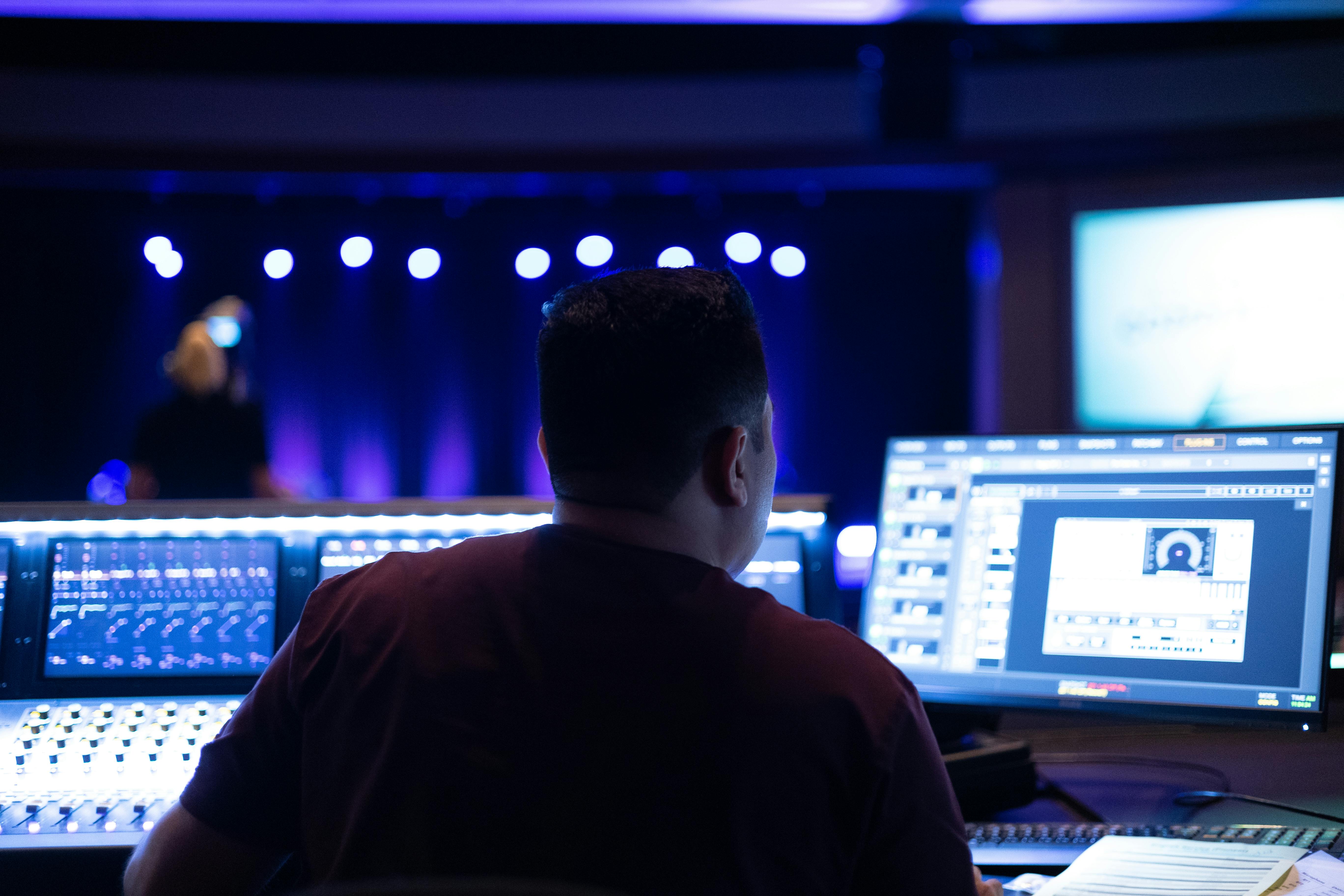
Live Mixing: Sculpting Sound in Real Time
Live mixing, or sound mixing in real time, is at the very heart of a live sound engineer’s job. It involves balancing all the sonic elements (instruments, vocals, effects) to achieve a clear, harmonious, and immersive result for the audience.
Unlike studio mixing, which takes place in a controlled environment, live mixing happens in real time under constantly changing conditions: the venue’s acoustics, the weather, the audience’s energy, or unexpected technical issues. Every decision must be made on the spot.
The sound engineer adjusts levels, equalization, and effects for each channel. They also manage stage monitors for the musicians, prevent distortion, and ensure that the sound remains consistent throughout all areas of the venue. It’s a job that requires careful listening, speed, and adaptability.
A good live mix delivers clear, balanced sound, free of excessive frequencies, where every detail can be heard. It is also the result of close collaboration with the artists and lighting technicians, because everything on stage is interconnected.
Mastering: The Sonic Finishing Touch
In the studio, mastering is the final stage of music production. Its purpose is to unify and enhance a mix so that it sounds good across all listening systems. This involves precise work on dynamics, frequencies, overall loudness, and sonic coherence.
But what about live sound? You don’t “master” a concert the same way you master an album, yet certain mastering principles still apply. The sound engineer often uses global processing on the final mix before it reaches the main speakers: an equalizer, a multiband compressor, or even a limiter to protect the system.
What is referred to as “live mastering” is therefore an optimization at the output stage of the mix. The goal is to achieve a homogeneous, powerful sound without distortion, regardless of the venue. It’s not about changing the character of the mix, but about making it more stable and controlled.
Mixing vs. Mastering: An Essential Difference to Understand
Live mixing focuses on detail: managing each instrument, adjusting vocals, and balancing effects. Live mastering, on the other hand, focuses on the whole—the overall coherence of the sound coming out of the speakers.
A useful comparison is photography: mixing is like focusing on each element of the image, while mastering is the final work on colors, light, and contrast to unify the whole picture.
Understanding the distinction between these two stages is crucial for several reasons:
- You structure your workflow better and avoid overloading the mix.
- You know when and where to apply certain types of processing.
- You gain clarity in your decisions and precision in your adjustments.
Above all, it strengthens your professionalism. Being able to explain to an artist or producer what belongs to mixing and what belongs to mastering shows that you truly understand every dimension of live sound.
Essential Tools for Live Mixing
To succeed in live mixing, you must master both technique and equipment. Here are the essential tools of a live sound engineer:
- The mixing console: the heart of the system, allowing you to manage channels, buses, effects, and monitor mixes. Modern digital consoles offer presets, automated recalls, and great flexibility.
- Equalization (EQ): used to shape the tone of each sound source. For example, you can attenuate certain frequencies to avoid feedback or bring a vocal forward in the mix.
- Compression: stabilizes the volume of instruments and vocals. A drum kit that’s too dynamic or a guitar that’s too loud? Compression helps maintain a consistent sound without losing energy.
- Effects (FX): reverbs, delays, or chorus add depth to the sound. In live situations, balance is key—too much effect can drown out clarity.
- Auxiliary buses: mainly used to manage monitor mixes for musicians, which are often very different from the audience mix.
- Spectrum analyzers and VU meters: help visualize frequencies and prevent clipping. In live sound, the eyes complement the ears.
A good live mixer knows their tools, but above all knows how to listen. Every venue, every band, every show is unique—the key is adapting your approach to the situation.
Mastering Processing in a Live Context
Even though live mastering is a simplified version of studio mastering, it plays an important role in overall sound quality.
The first objective is stability. A well-set multiband compressor or limiter prevents sudden peaks from distorting the sound while preserving dynamics—this is known as “system protection.”
Next comes frequency coherence. A global EQ on the main output helps compensate for a venue’s acoustic characteristics, whether it’s a room that resonates too much in the low end or one that’s overly bright in the highs.
Finally, live mastering aims to give the mix presence. A mix that’s too flat can feel dull in a large venue; a slight adjustment in the midrange or high frequencies can make the sound more lively and immersive.
That said, live mastering must remain subtle. Too much processing can crush dynamics and cause listener fatigue. The goal is to balance, not to transform.
Adapting Mixing and Mastering to the Context
Each type of event comes with its own constraints, and a live sound engineer must adapt:
- Outdoor festivals: sound dissipates easily. You’ll need a more “present” mix and mastering with a bit more compression to ensure impact.
- Indoor concert halls: acoustics play a major role. Mixing must compensate for natural reverberation, and mastering should avoid overly resonant low frequencies.
- Intimate clubs: the sound must remain clear even at lower volumes. The mix focuses on midrange and vocals, while global processing stays light.
- Recording or streaming: here, the mix is designed for digital playback. Live mastering takes into account broadcast platforms or online streams, with consistent and controlled loudness.
Knowing how to read a room and anticipate its acoustic behavior is a key skill—and what separates a good sound engineer from a great one.
Best Practices for Successful Live Mixing and Mastering
- Prepare your stage plot: identify every microphone, instrument, and monitor. Anticipate musicians’ specific needs.
- Run a complete soundcheck: take time to test each source and fine-tune your EQ before the show.
- Use snapshots: on digital consoles, save different settings for songs or key moments in the set.
- Monitor your levels: always keep an eye on peak indicators. A slightly lower volume is better than distortion.
- Minimize latency: avoid stacking too many effects or plug-ins. Responsiveness is critical.
- Communicate with the artists: a great mix depends as much on human interaction as on technology.
- Review past shows: record, listen back, and improve. Every concert is a lesson.
Applied consistently, these habits ensure steady progress and professional sound quality in any context.
The Sound Engineer: Between Art and Technology
Mixing and mastering are not just technical processes—they are also artistic acts. In a live setting, the sound engineer becomes a performer in their own right: shaping the audience’s perception, amplifying emotion, and balancing power with subtlety.
The mission is to serve the music, not dominate it. Technology is a tool, not an end in itself. True mastery of live sound lies in this balance between precision and sensitivity.
Conclusion
In short, live mixing shapes sonic detail in real time, while live mastering ensures the coherence and stability of the final output. Understanding this difference allows sound engineers to optimize their setup, manage their equipment more effectively, and—above all—deliver an unforgettable listening experience.
Do you dream of getting started and learning the professions of beatmaker, DJ, or sound engineer? Book an appointment!