


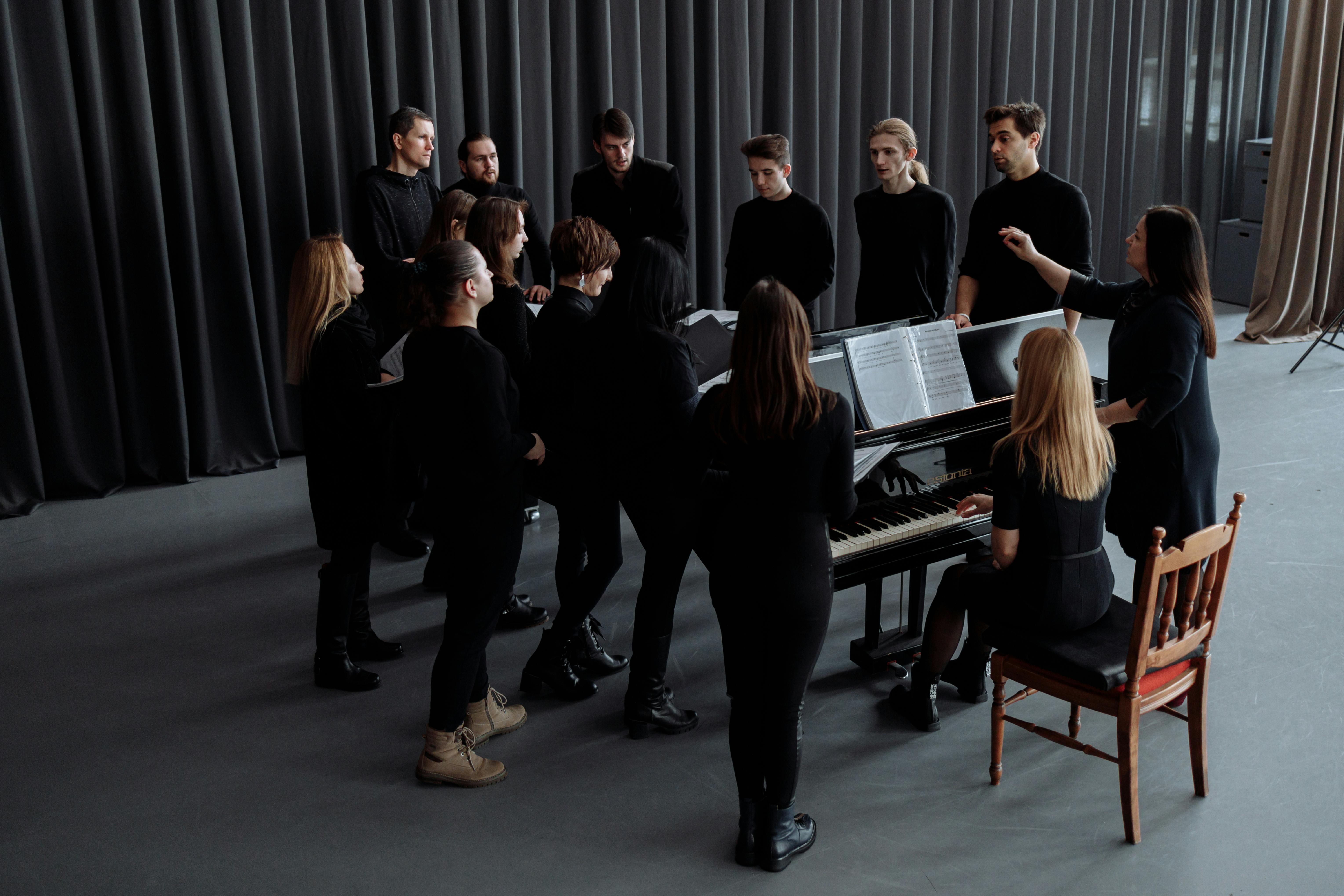
In the demanding and ultra-competitive world of music production, there is one constant that the greatest artists repeatedly emphasize: no one truly succeeds alone. Behind every beat that defines a generation, behind every DJ who electrifies a festival, there is often a mentor — a guide, a reference point, a decisive influence. Whether it is an experienced producer, a music teacher, an insightful manager, or an established artist, mentors play a crucial role in the artistic and professional development of beatmakers and DJs.
This article explores in depth why this figure is so essential, how mentors shape careers, and why every emerging artist should seek out (or become) a mentor.
An Invisible Pillar: Why Beatmakers and DJs Need Mentors
Self-teaching can take you far, especially in the age of online tutorials, collaborative platforms, and increasingly intuitive software. However, a mentor provides something no tool — no matter how advanced — can replace: human experience.
A mentor sees pitfalls before they appear. They know what to avoid, what to repeat, and when to take risks. For a beatmaker crafting early productions or a DJ developing a sonic identity, this experienced perspective can shorten the learning curve by years.
A mentor is often the first person to articulate a potential that is still unclear. They identify strengths, weaknesses, and unique traits the artist has not yet recognized. In doing so, they save invaluable time.
Technical Support in a Rapidly Evolving Ecosystem
Music production evolves at an intense pace. New plugins, emerging trends, new mixing techniques, and new distribution formats constantly reshape the landscape. Today’s beatmakers and DJs must adapt continuously.
Mentors have lived through multiple cycles. They know what is a passing trend and what will become a standard. They can pass on:
- Sound design techniques that are difficult to learn alone
- Workflow optimizations that boost creativity
- Mixing and mastering insights refined over decades
- Essential habits for live performance
Where a tutorial offers a single solution, a mentor provides a broader vision. They teach how to think rather than how to copy — and in music, critical thinking is the foundation of artistic identity.
Developing a Unique Sonic Identity Through Mentorship
The greatest challenge for a beatmaker or DJ is not creating a good sound, but finding their sound — one that is recognizable within seconds. This sonic signature rarely emerges in isolation. It is forged through dialogue, feedback, questioning, trial, and error.
Here, the mentor plays a decisive role:
- Encouraging exploration, risk-taking, and experimentation
- Calling out work that feels too safe, predictable, or already heard
- Teaching how to draw inspiration without imitation
The result is faster progress — and more authentic artistic growth.
The Psychological Role: Encouragement, Reassurance, and Challenge
An artistic journey is never linear. Periods of creative flow alternate with moments of deep doubt. A mentor provides stability during these critical phases.
They reassure when criticism becomes heavy.
They highlight small, often invisible victories.
They challenge the artist when stagnation appears.
This balance between high standards and support helps beatmakers and DJs maintain direction during turbulent moments.
Having a mentor also helps avoid common traps: self-sabotage, toxic comparison, fear of exposure, and paralyzing perfectionism. Artists build a stronger mindset — and in music, mindset often makes the difference.
Privileged Access to Networks and Opportunities
Despite digital transformation, the music industry remains deeply rooted in human connections. A mentor can open doors that would otherwise remain closed:
- Professional studios
- Established beatmakers and DJs
- Labels
- Agents and managers
- Artists seeking collaborators
In an industry where opportunities often arise from chance encounters, having someone who can introduce, recommend, or simply inspire you can change a career.
Mentors also teach how the industry truly works — legal protection, negotiation, and avoiding exploitation — providing a critical advantage for newcomers.
Learning Discipline and Professional Routines
High-level beatmakers and DJs do more than create. They train, experiment, rehearse, structure their days, and obsessively refine their craft. This discipline is learned, not innate.
A mentor helps establish strong habits:
- Organizing work to produce more effectively
- Developing a smooth workflow
- Setting realistic goals
- Working consistently rather than relying on bursts of inspiration
Mentors hold artists accountable and teach that discipline protects creativity.
Natural vs. Structured Mentorship: Which to Choose?
There are two main forms of mentorship, each with distinct advantages.
Natural mentorship
Often informal, born from a connection, admiration, or collaboration. It offers:
- Strong human bonds
- Honest feedback
- Intuitive growth
Structured mentorship
More formal, often through academies, training programs, or coaching. It provides:
- Clear frameworks
- Defined objectives
- Regular learning rhythms
Both are effective, but the ideal path often combines structure for progress and human connection for personal growth.
How to Find a Mentor as a Beginner
Finding a mentor is not about luck — it is a proactive process. Effective approaches include:
- Attending masterclasses, workshops, and conferences
- Engaging in online communities (Discord servers, forums, production groups)
- Sending thoughtful messages to artists you admire — asking for specific advice, not collaborations
- Joining emerging labels or collectives
- Offering value: helping, collaborating, creating, and building projects
Mentorship as a Source of Ongoing Inspiration
The most successful artists are often lifelong students. Having a mentor reinforces this mindset of continuous learning and reminds artists that:
- Growth never stops
- Each new track can surpass the last
- Innovation often comes from collaboration
A good mentor does not impose their style — they inspire artists to discover their own.
Conclusion
Being a beatmaker or DJ means navigating a creative, technical, and deeply human world. Mentors play a defining role in this journey: accelerating learning, refining talent, opening doors, preventing mistakes, and inspiring new visions.
If you truly want to progress, find someone who has already made the mistakes for you — and be ready to learn, listen, and challenge yourself. The best artists are not those who know everything, but those who are willing to be guided.
Dreaming of getting started and learning the professions of beatmaker, DJ, or sound engineer? Book an appointment to learn more!